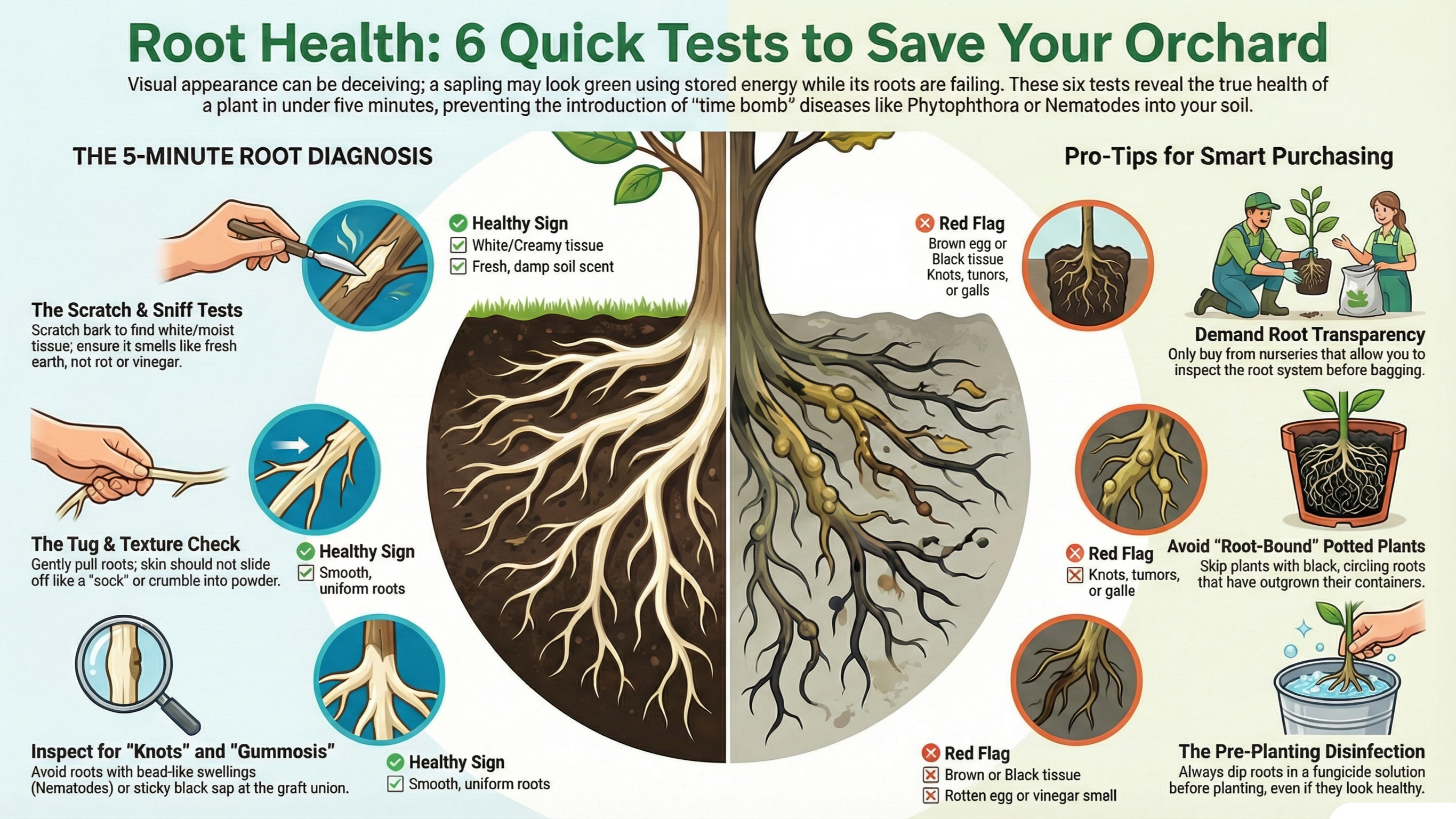
Buying an infected seedling is like planting a "time bomb" in your orchard. Root diseases such as Phytophthora (Root Rot) or Root-Knot Nematodes don't just kill the new tree; they can contaminate your soil for decades.
While a seedling might look green and healthy above ground, the real story is hidden beneath the soil. Here are 6 expert-verified field tests to perform at the nursery to ensure you are investing in a healthy, pathogen-free tree.
1. The Scratch Test (Checking Tissue Viability)
This is the fastest way to verify if the root tissue is alive and functioning.
- How to do it: Use your fingernail or a small knife to gently scratch the bark of a secondary root.
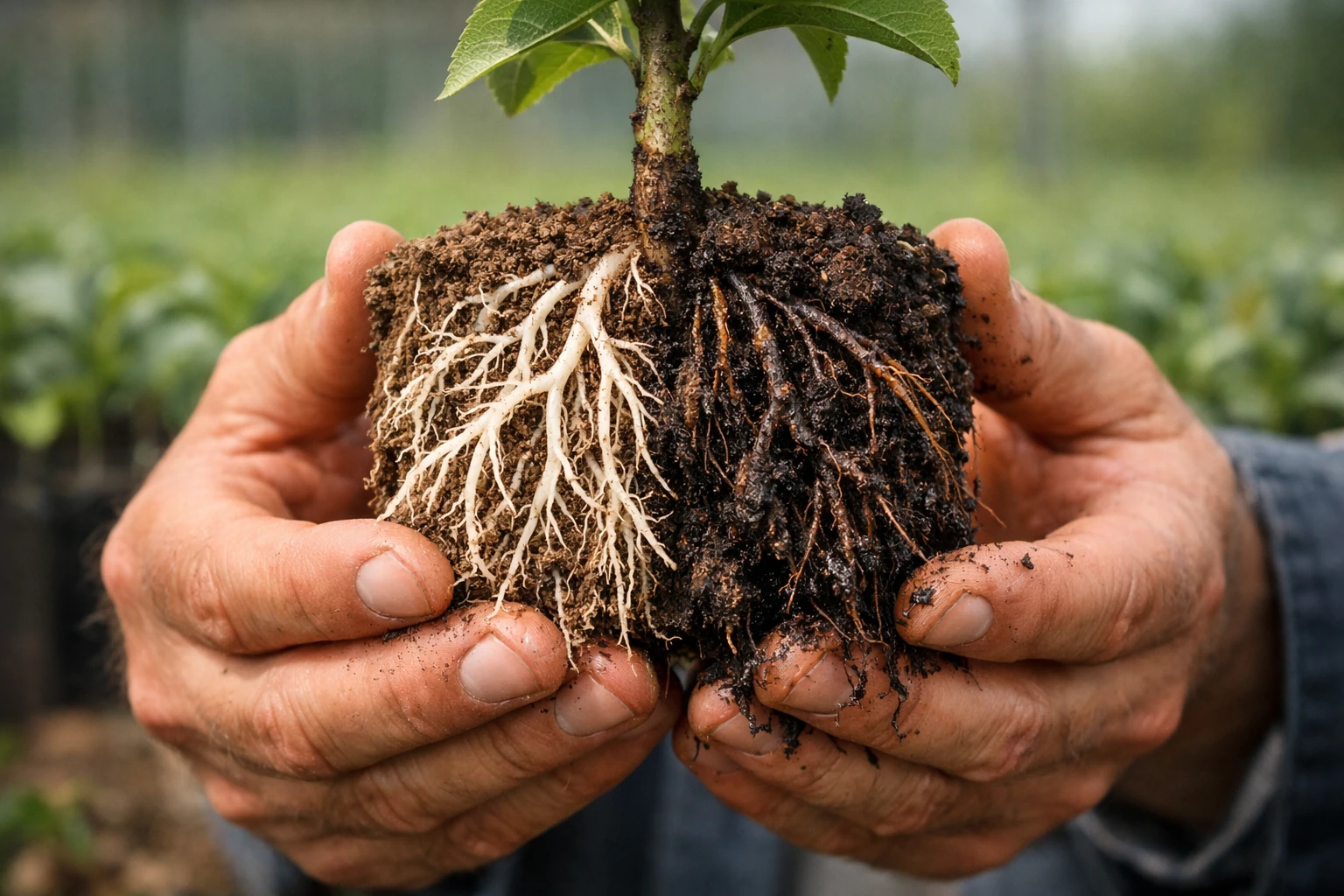
- The Result: A healthy root will show creamy-white or light green, moist tissue underneath. If the tissue is brown, black, or dry, the root is dead, likely due to fungal infection or waterlogging.
2. The Sniff Test (Detecting Anaerobic Activity)
Your nose is a powerful tool for detecting early-stage rot.
- How to do it: Bring a handful of roots close to your nose and take a deep breath.
- The Result: Healthy roots smell like fresh, damp earth. A foul, sour, or "rotten egg" (sulfur) smell is a definitive sign of anaerobic bacteria and advanced root decay.
3. The Slip Test (The "Sock" Effect)
When roots rot, the outer cortex separates from the inner vascular core.
How to do it: Hold a small root between two fingers and pull gently.
The Result: In a healthy seedling, the bark stays firmly attached to the wood. If the outer bark slips off like a "sock," leaving a thin white wire behind, the plant is suffering from Pythium or Phytophthora root rot.
4. The Knot Inspection (Nematode Detection)
This test looks for one of the most destructive hidden pests: Root-Knot Nematodes.
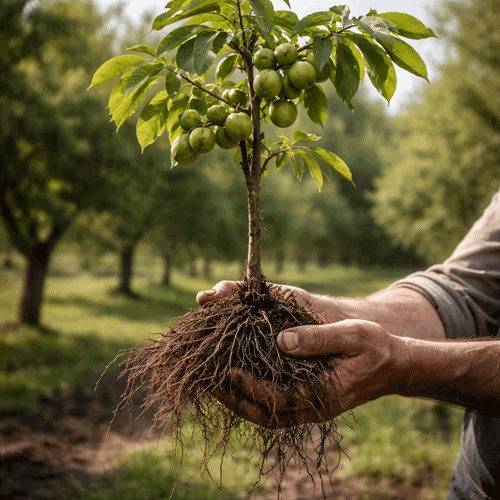
How to do it: Carefully examine the fine, fibrous roots for any abnormalities.
The Result: Healthy roots are smooth and tapered. The presence of small beads, galls, or swollen knots on the fine roots indicates a severe nematode infestation, which is nearly impossible to eradicate once planted.
5. The Root Hair Integrity Test
Root hairs are responsible for water and nutrient uptake. If they are missing, the tree won't survive the transplant.
- How to do it: Gently shake the seedling and observe the fine, thread-like roots.
- The Result: If the fine roots are brittle, turn to powder, or fall off easily, the tree has suffered from extreme drought stress or high salinity. Healthy seedlings should have a dense, flexible network of white capillary roots.
6. Crown & Collar Inspection (Gummosis Check)
The "collar" (where the stem meets the roots) is the most vulnerable part of the tree.
- How to do it: Clear the soil away from the base of the trunk and look for discoloration.
- The Result: Any signs of dark ooze (gum), black lesions, or sunken bark at the graft union or collar indicate Canker or Gummosis. Never bring such a tree into your orchard, even if it's offered for free.
Summary: Quick Diagnostic Table
| Test Name |
Signs of Health |
Signs of Infection / Stress |
| Scratch Test |
White/Light Green tissue |
Brown/Black necrotic tissue |
| Sniff Test |
Earthy, fresh scent |
Sour, vinegary, or rotten smell |
| Slip Test |
Bark is firm and attached |
Bark slides off the root core |
| Visual Knot Test |
Smooth, uniform roots |
Galls, beads, or swollen nodes |
Pro-Tips for International Buyers :
- The "Pot-Bound" Warning: If buying container-grown seedlings, ensure roots aren't circling the pot tightly. "Girdled roots" will eventually choke the tree.
- Disinfection Protocol: Even if roots pass all tests, always dip them in a fungicidal slurry before planting to prevent dormant pathogens from activating.
- Certification: Only trust nurseries that provide a Phytosanitary Certificate ensuring the stock is virus-free.